A neatly trimmed hedge makes a garden look sharp and keeps paths, drives and windows clear. Casey Jones trims and shapes hedges of all kinds, and cuts back hedges that have got out of hand, with all the cuttings cleared away afterwards.
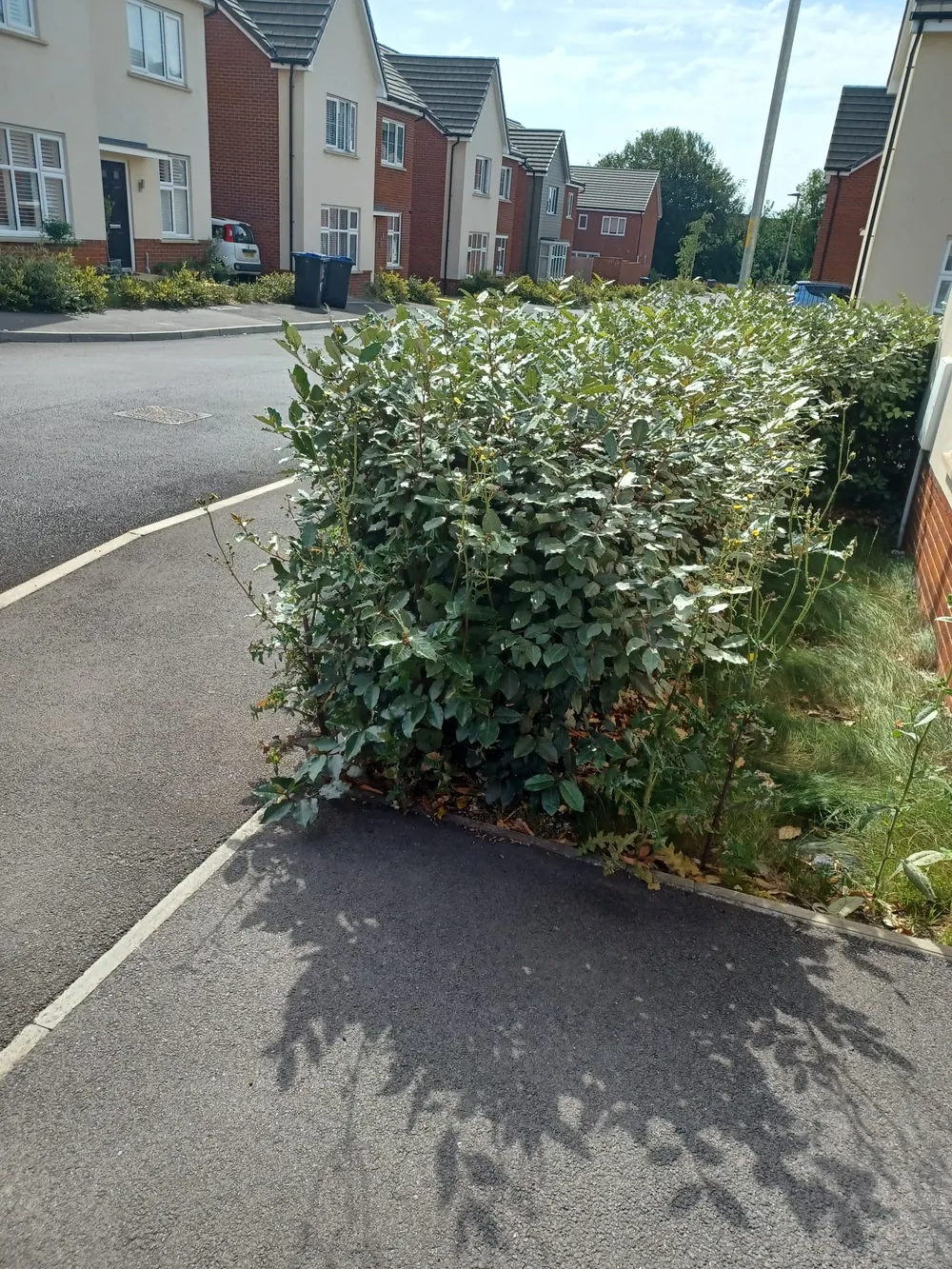
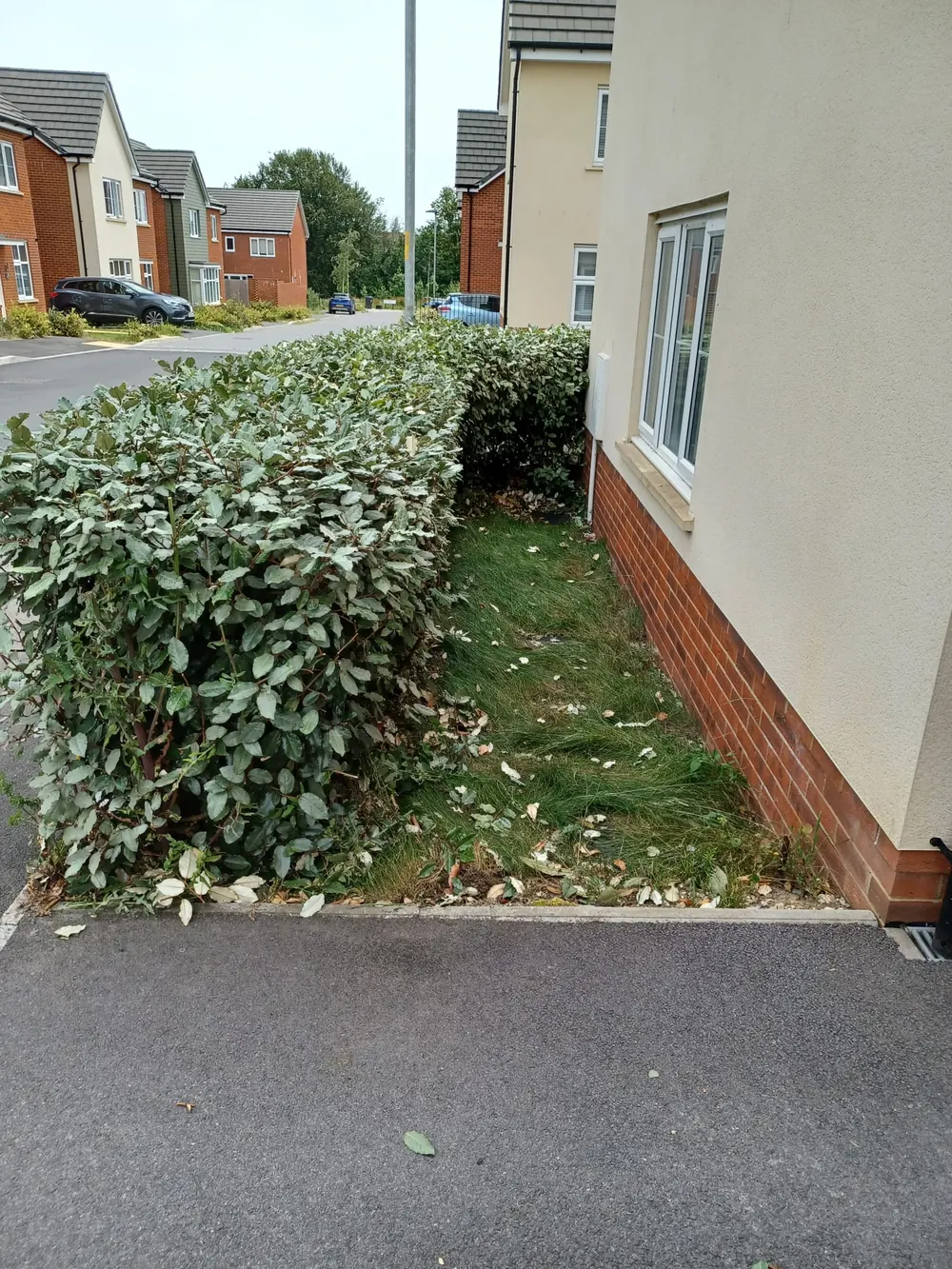
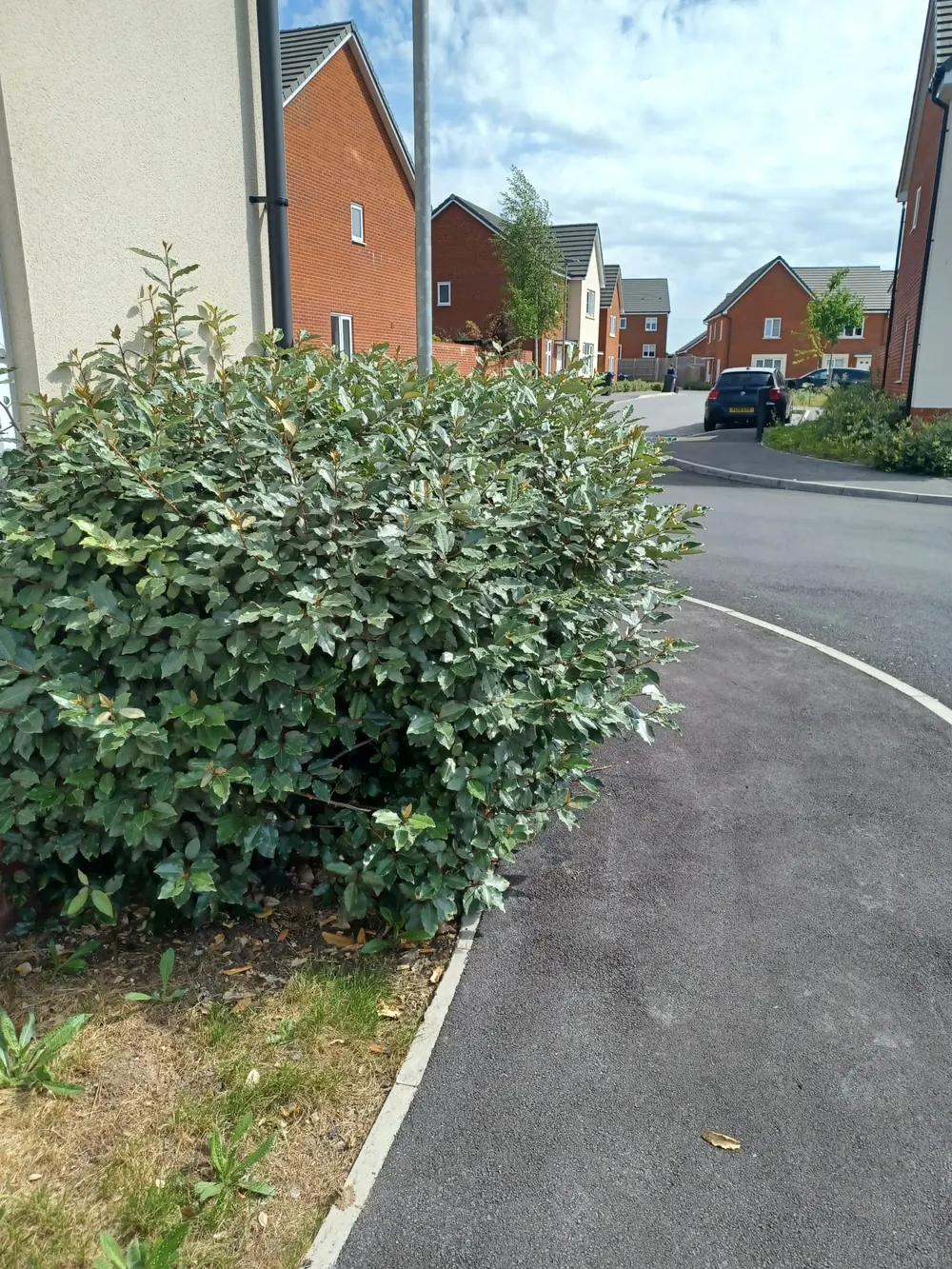
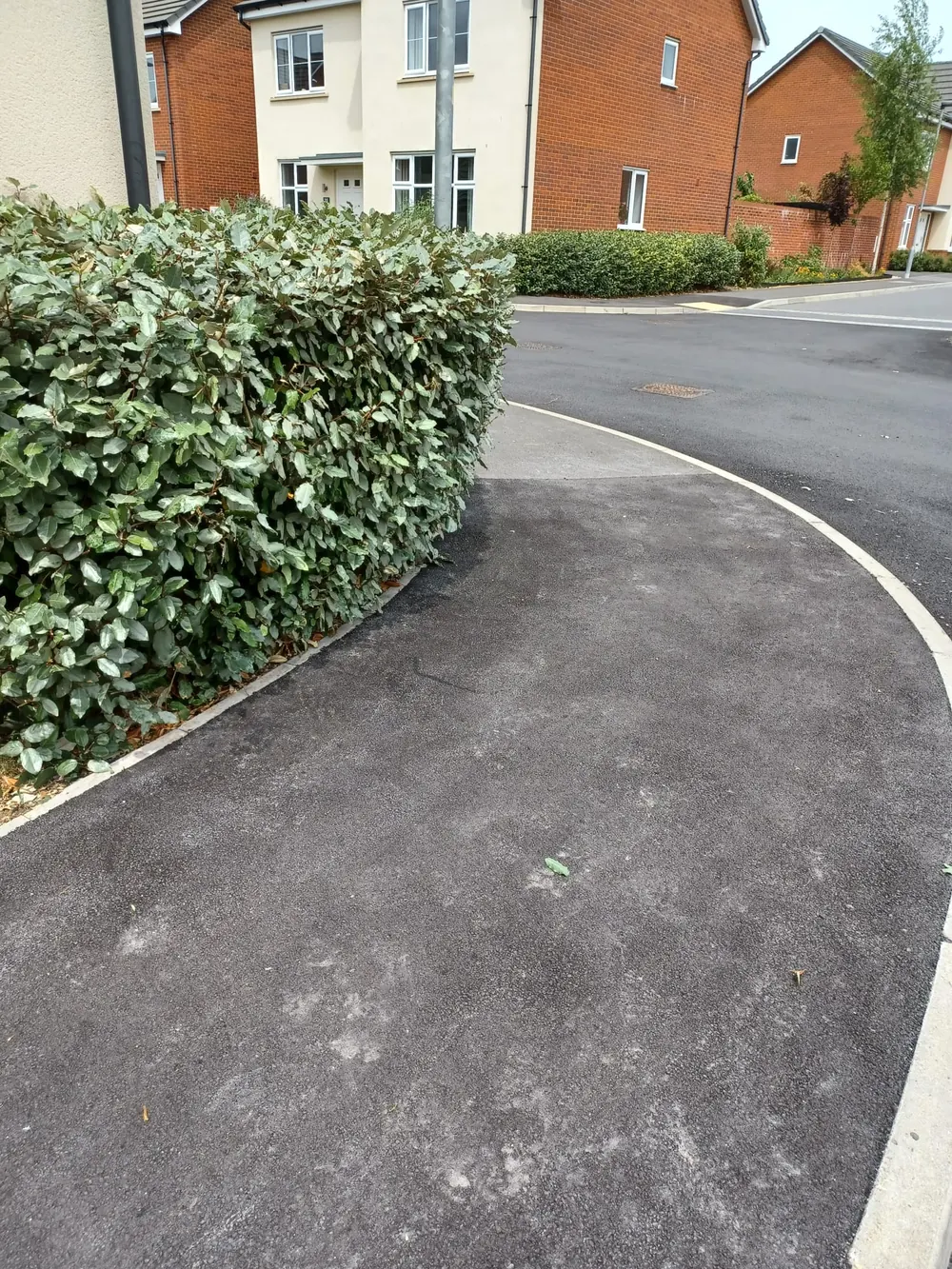
The photos below show hedges at a new-build home that had grown out over the path, trimmed back square and tidy.
Regular trims keep hedges dense
Most formal hedges look best trimmed once or twice a year, and faster-growing hedges may need more. Regular trimming encourages thicker growth and stops the hedge getting too tall or wide. Hedges are usually cut slightly narrower at the top than the bottom, so light reaches the lower branches and the base stays full.
Cutting back overgrown hedges
Where a hedge has spread over a path or grown too large, it can be cut back to bring it under control. Some hedges recover well from hard cutting while others are best reduced gradually, so the approach depends on the type of hedge.
Nesting birds
Hedges are popular nesting sites, and it is an offence to damage or destroy an active nest. The main nesting season runs roughly from March to August. Hedges are checked before cutting during these months and any active nests are left undisturbed.