A patio is one of the most used parts of a garden, and one of the hardest to put right if it is not laid properly. Casey Jones lays new patios, paths and paved areas on a solid, well-prepared base, so the slabs stay flat, firm and free-draining for years.
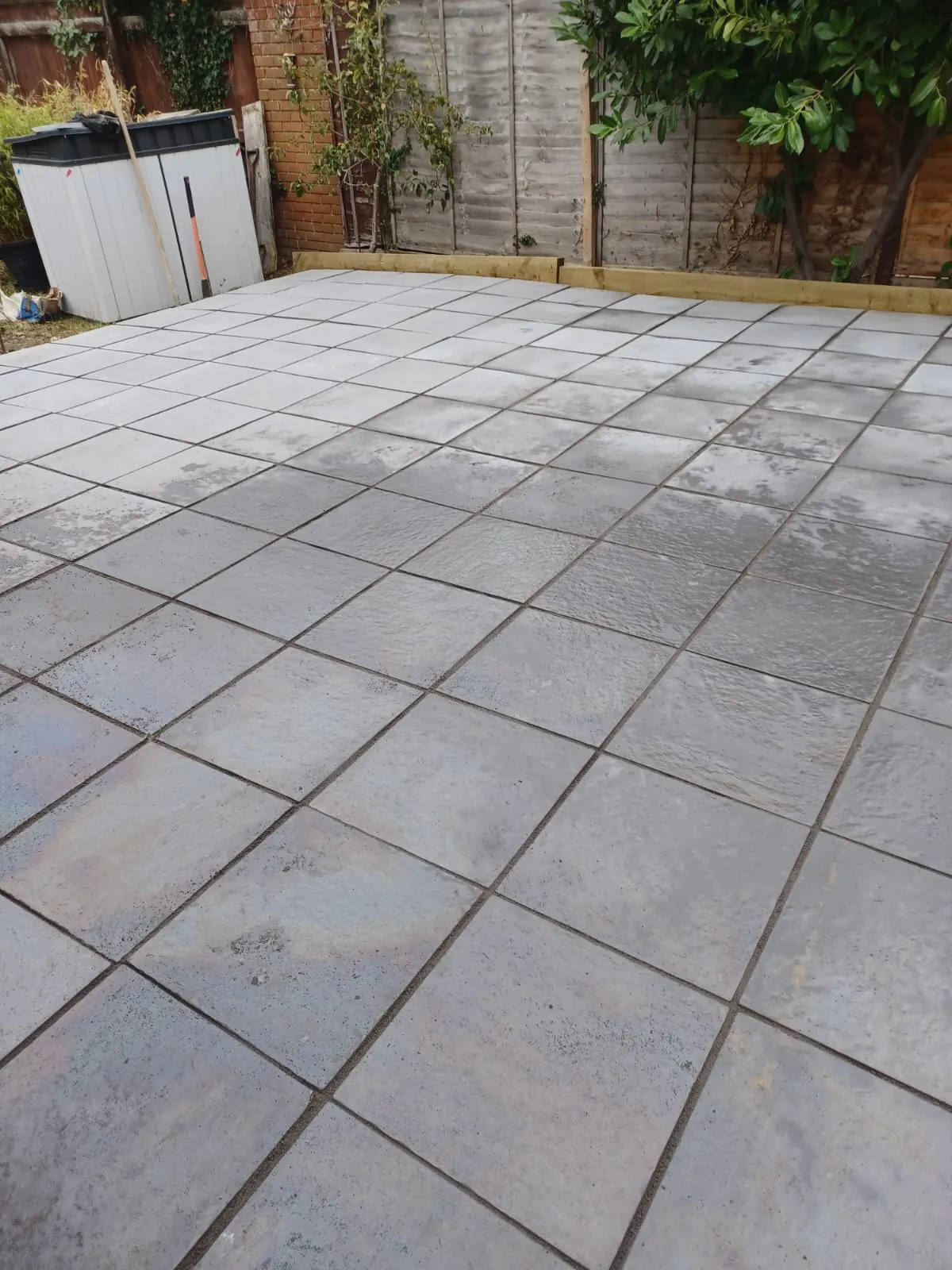
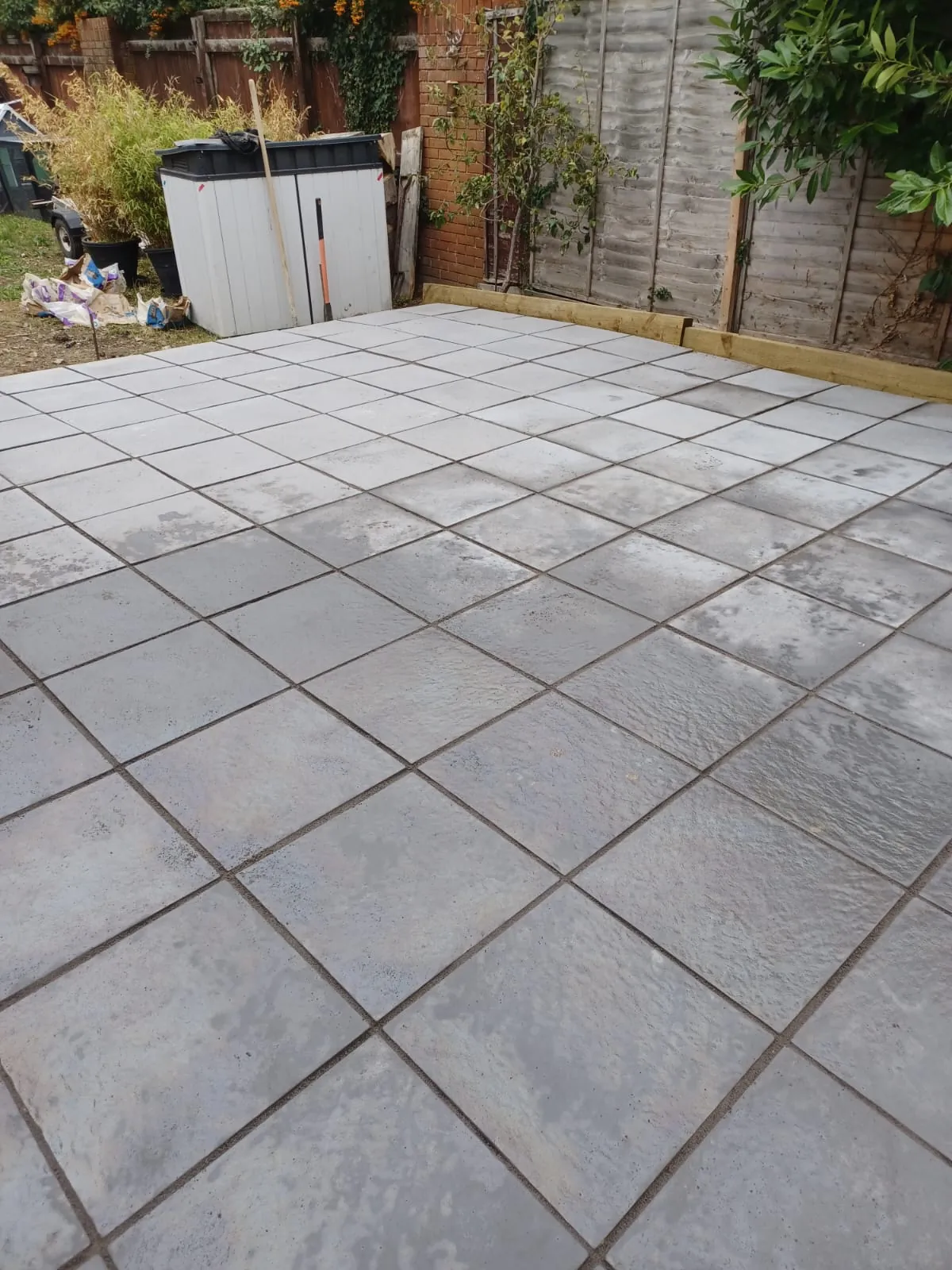
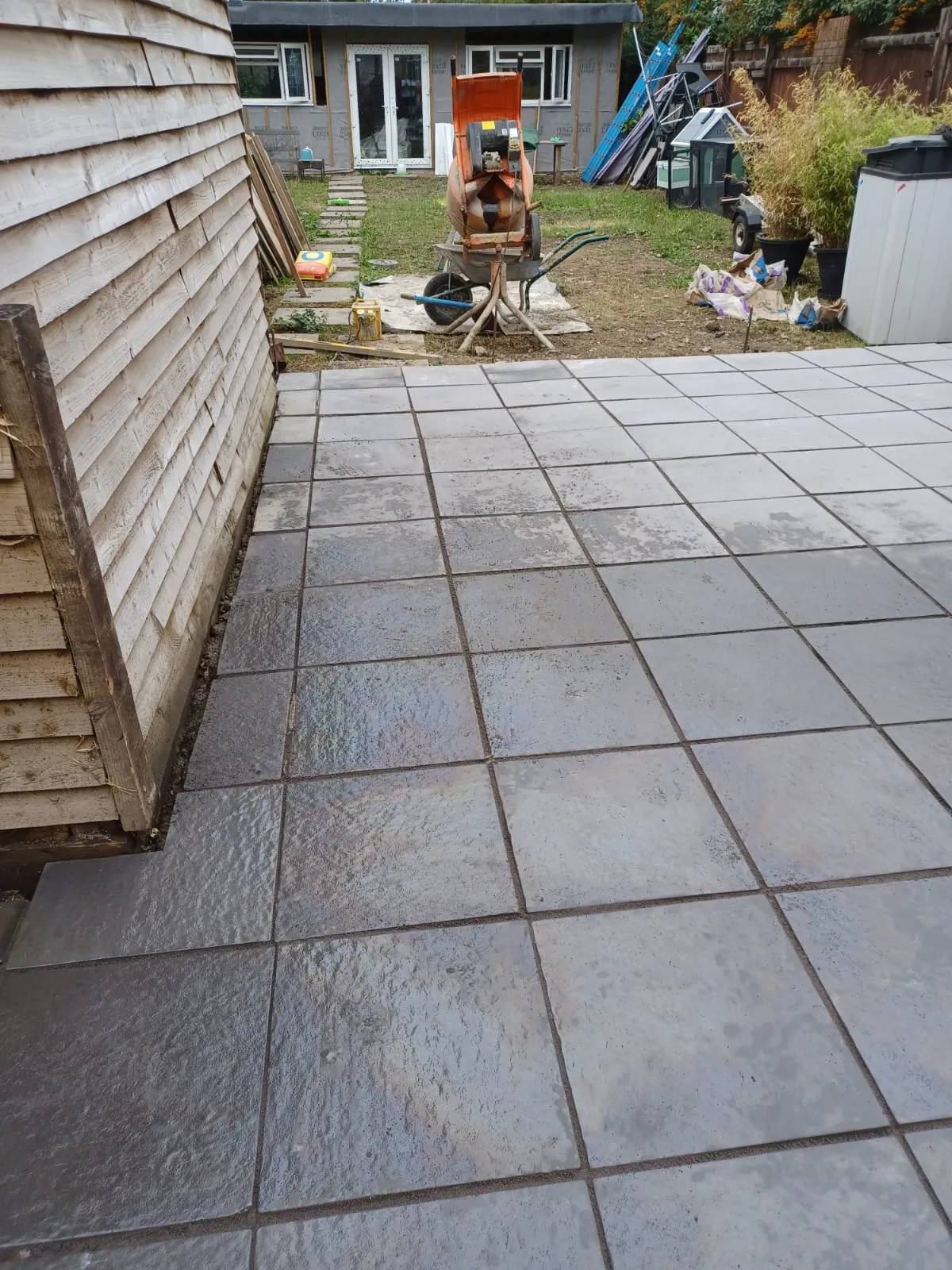
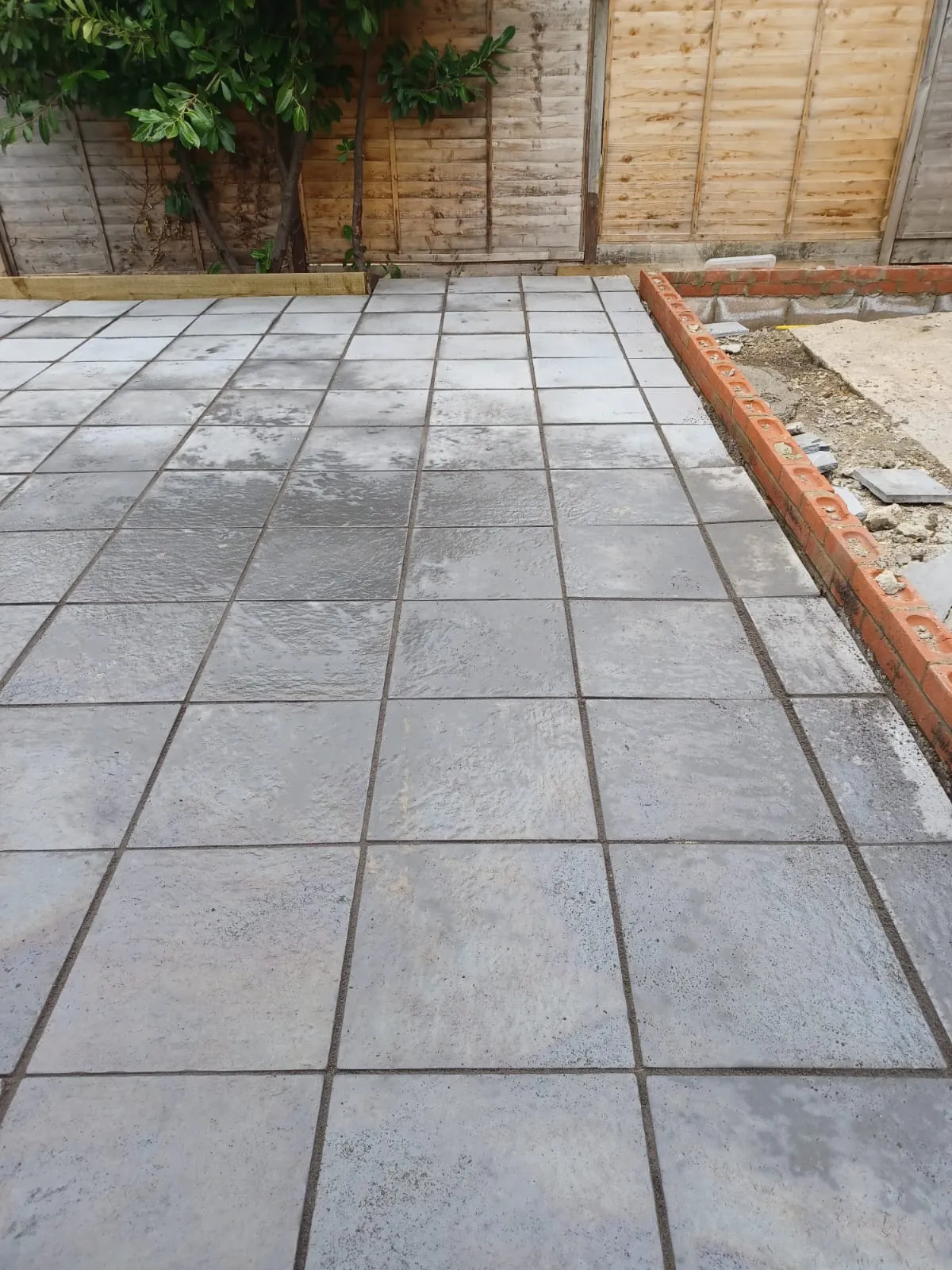
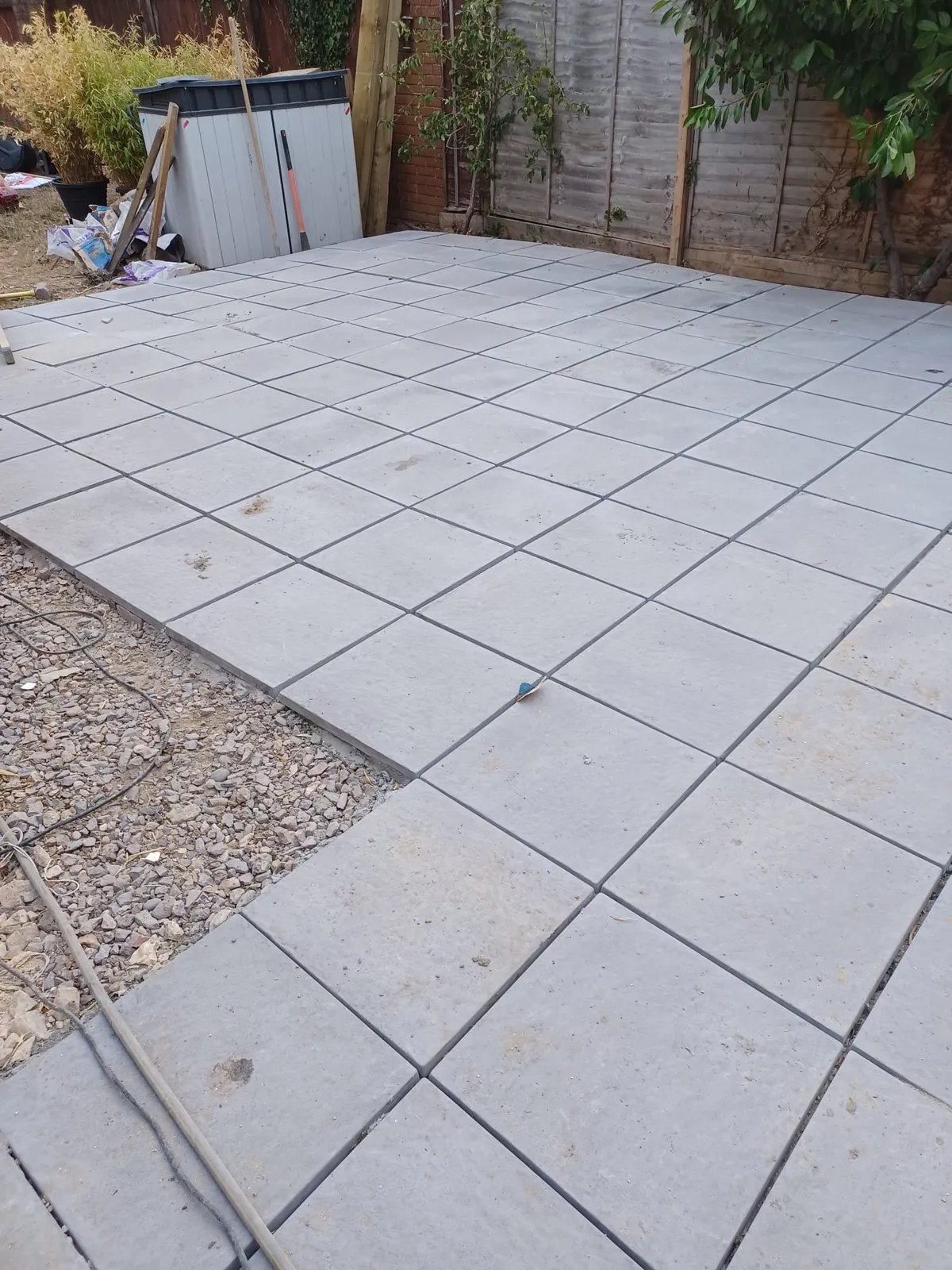
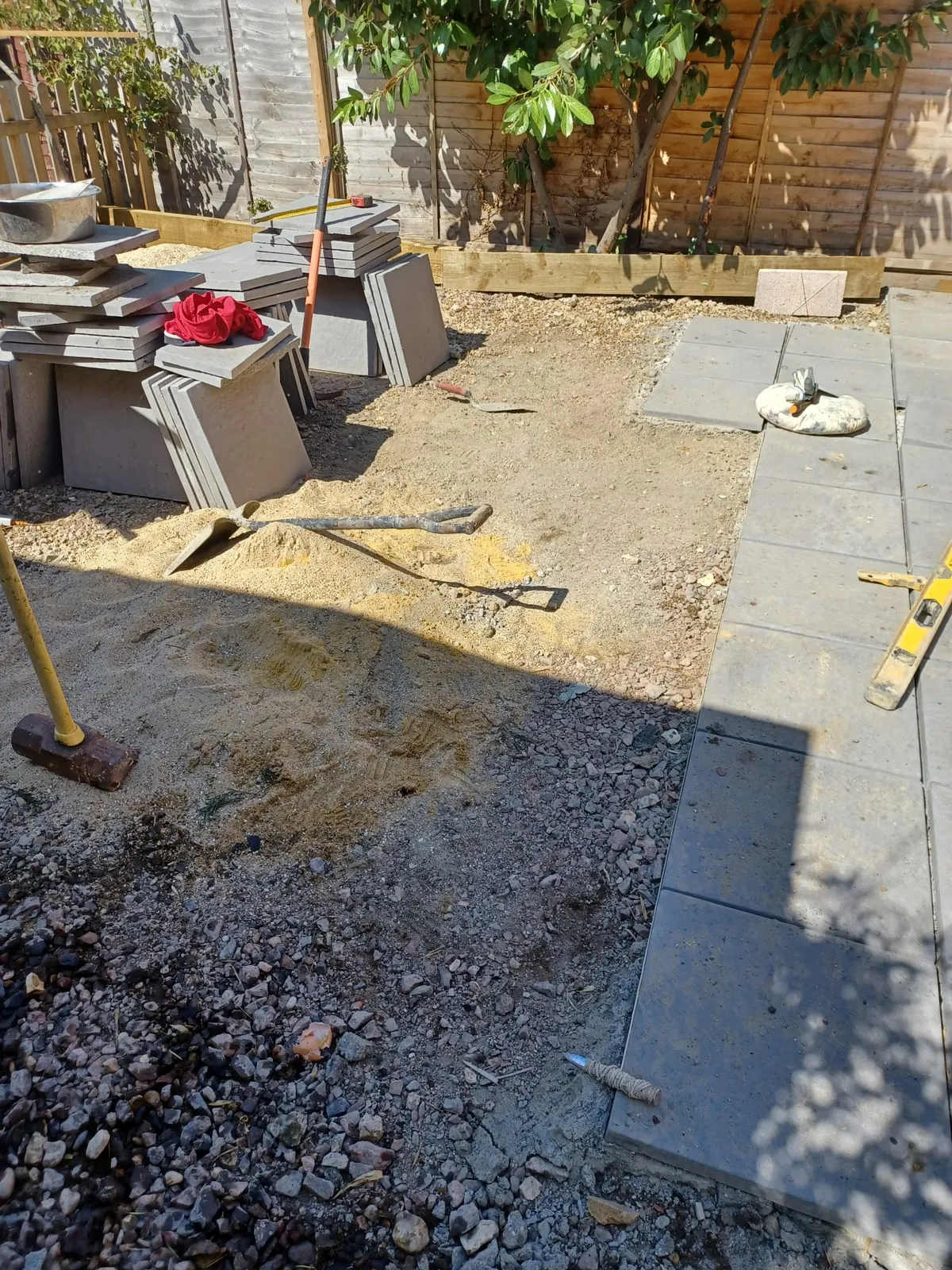
The photos on this page come from a recent back garden job: the ground was dug out and prepared, each slab was bedded on mortar and checked with a level as it went down, and the joints were pointed and the surface washed off to finish.
Why the groundwork matters
Most patio problems, such as rocking slabs, sinking areas and puddles, come from what is underneath rather than the slabs themselves. A properly laid patio starts with digging out the area, putting down a compacted sub-base and then bedding each slab on mortar. It takes longer than laying slabs on sand, but it is what keeps the surface solid.
Drainage and levels
A patio needs a slight fall so water runs away from the house and off the surface. Where a patio meets the house wall, it is generally recommended that the finished surface sits at least 150mm below the damp-proof course so rain does not splash up and cause damp. Levels are set out before the slabs go down so these details are right from the start.
Front gardens and planning
In England, laying a hard surface over more than five square metres of a front garden generally needs planning permission unless the surface is permeable or the water drains to a lawn or border. Back garden patios do not usually need permission. If your job involves a front garden, Casey can talk through the options with you.